
2026-07-24
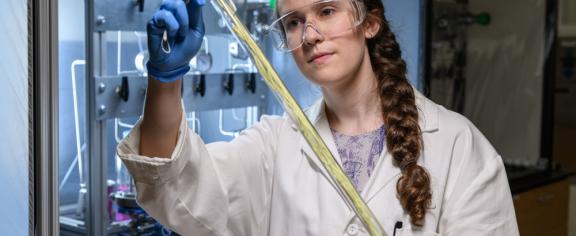
Institute researchers will lead two projects and contribute to several others as part of the Department of Energy’s $5 billion initiative.
2026-06-24
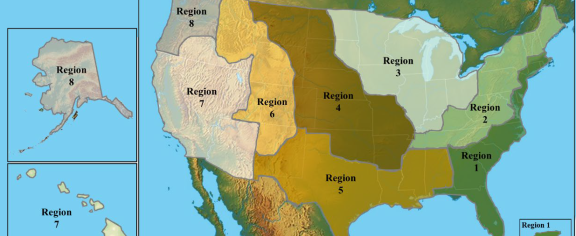
A new Department of Energy award will help Georgia Tech lead a regional effort to identify, recover, and reuse materials essential to energy, manufacturing, and national security.
2026-09-18
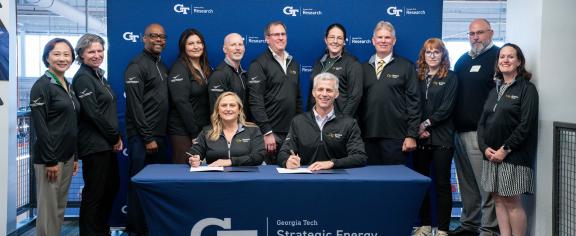
Together, the organizations will pursue new opportunities in joint research, workforce development, technology commercialization, and talent exchange.

2026-09-09
The CHORUS research project will combine advanced flood modeling, artificial intelligence, and community partnerships to help coastal residents in Georgia and New York evaluate flooding solutions and shape resilience planning.

2026-09-01
To advance understanding of turbulence, the National Science Foundation is establishing a new, $30 million Science and Technology Center (STC) at Michigan State University. Georgia Tech is among eight universities supporting the center.

2026-02-02
Georgia Tech has appointed Yuanzhi Tang as executive director of the Strategic Energy Institute (SEI), effective Feb. 1.

2026-07-27
Yuanzhi Tang, executive director of the Strategic Energy Institute (SEI) and Georgia Power Professor in the School of Earth and Atmospheric Sciences, has been named an American Chemical Society (ACS) Fellow.
2026-08-03
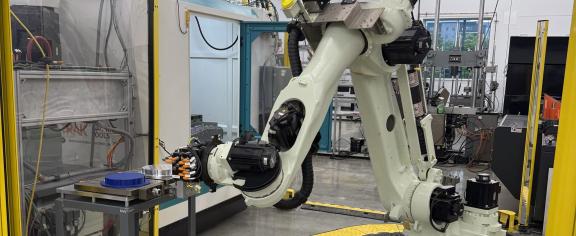
The cloud lab will give researchers nationwide remote access to Georgia Tech’s Advanced Manufacturing Pilot Facility, pairing AI with autonomous experimentation to accelerate new materials discovery.

2023-03-21
Electric vehicles are becoming increasingly popular, and with economic and environmental impacts colliding, Georgia Tech experts are leading the way in the development of next-generation solutions.

2026-07-20
Richard Simmons, principal research engineer in the George W. Woodruff School of Mechanical Engineering, has been named interim director of the Student Competition Center (SCC).