
Beyond the Game: Georgia Tech on the FIFA World Cup
The FIFA World Cup is more than soccer. It’s a global story about technology, money, culture, infrastructure, data, and international influence. Georgia Tech experts can provide media commentary and analysis on the trends, controversies, innovations, and business behind the world’s most-watched sporting event.
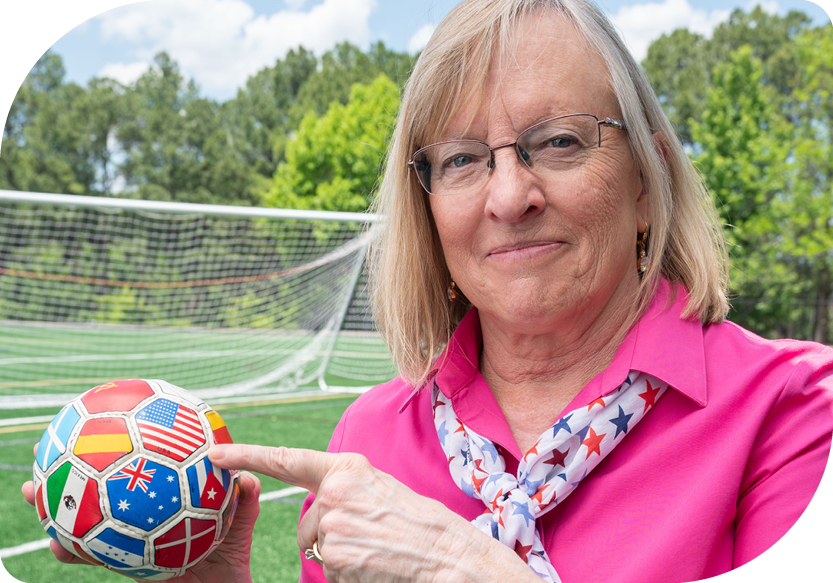
Melinda “Mindy”
Millard-Stafford
Director of the Exercise
Physiology Laboratory,
College of Sciences


Mindy Millard-Stafford is a Georgia Tech professor and leading expert in exercise physiology, specializing in thermoregulation, hydration, and performance in extreme heat. For more than 30 years, she has led research on how the body responds to heat stress and fatigue, with applications for athlete safety and performance. Her research informs strategies to protect athletes from heat stress, optimize hydration, and maintain performance during physically demanding matches in high-temperature conditions.
(text and background only visible when logged in)
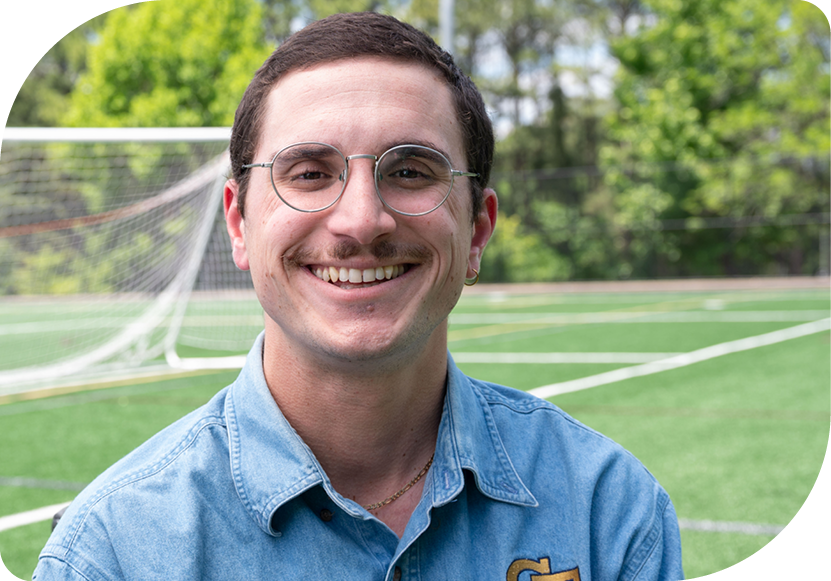
Declan
Abernethy
Lecturer,
Ivan Allen College of Liberal Arts
Declan Abernethy is a Georgia Tech scholar specializing in the history and sociology of sport, with a focus on soccer’s cultural and social impact. His research examines fan communities, gender equity, and the role of technology in shaping modern soccer. His work provides insight into how global events like the FIFA World Cup influence identity, fandom, and community dynamics in host cities and beyond.
(text and background only visible when logged in)
Michelle LaPlaca
G.P. “Bud” Peterson and Valerie H. Peterson Professor,
College of Engineering
Michelle LaPlaca is a Georgia Tech biomedical engineering professor specializing in traumatic brain injury, concussion, and neuroengineering. Her research focuses on injury biomechanics, diagnostics, and cognitive assessment tools, including sideline testing for concussions. Her work supports efforts to better detect, manage, and prevent head injuries in high-impact sports, informing player safety protocols during global events.
Kirk Bowman
Professor,
Ivan Allen College
of Liberal Arts

Kirk Bowman is a Georgia Tech professor and expert in Latin American politics and global development whose research explores the intersection of soccer, society, and international affairs. A Fulbright scholar and award-winning educator, he studies how the sport shapes political narratives and social outcomes across regions. His work provides context for understanding the World Cup’s global impact on governance, cultural identity, and international relations, particularly in soccer-centric regions like Latin America.
Michael Hunter
Professor,
College of Engineering

Michael Hunter is a Georgia Tech professor and transportation systems expert whose work focuses on traffic operations, adaptive signal control, and corridor design. He leads major research initiatives on digital twins, AI-driven signal optimization, and connected infrastructure. His work modeling real-time traffic in cities like Atlanta directly applies to managing large-scale events, where efficient traffic flow, transit prioritization, and smart city coordination are critical to moving crowds safely and reducing congestion.
Related News
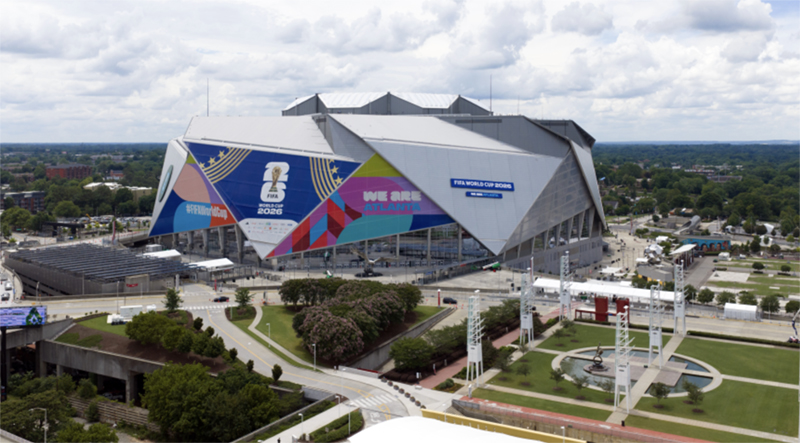
Atlanta’s World Cup Beyond the Hype
Georgia Tech experts say the 2026 World Cup will bring global attention and economic activity, but the real measure of success is who benefits and what lasting impact the tournament leaves behind.