

2026-06-30
Assistant Professor Ali Sarhadi is using AI and digital twins to predict how and where major storms will cause the most damage.

2026-08-12
The new AI framework called SlideAgent helps large language models (LLMs) better understand complex visual documents used in the workplace like presentation slide decks, brochures, and reports.

2026-09-21
Georgia Tech's ETHOS initiative brings together expertise from across the Institute to advance human-centered research models that could accelerate the development of safer, more effective therapies.

2026-09-25
Georgia Tech researcher Saman Zonouz is helping shape resilient AI practices for the electricity grid. His work connects workshop planning with research on AI-enabled grid protection and emerging vulnerabilities.

2026-09-21
This summer, M.S. student Joey Cuthbert completed an internship at the Air Force Research Laboratory (AFRL), supporting work that addresses national priorities while laying the foundation for future innovations.

2026-09-03
Georgia Tech researchers spent two years helping to answer the question: What can artificial intelligence (AI) do to protect software from cyberattacks?

2026-09-01
To advance understanding of turbulence, the National Science Foundation is establishing a new, $30 million Science and Technology Center (STC) at Michigan State University. Georgia Tech is among eight universities supporting the center.
2026-08-31
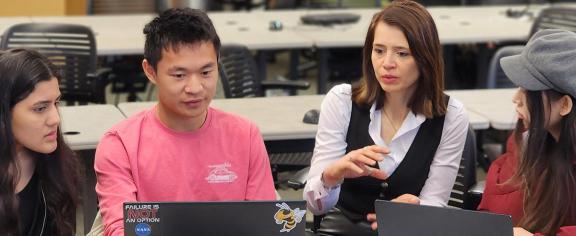
The new Academic AI Strategy establishes a shared vision for artificial intelligence (AI) across teaching and learning while providing practical resources, including a new Academic AI Playbook for faculty and staff.

Georgia Tech Strengthens Atlanta's Innovation Ecosystem Through Tech Square Tech Hop and Avant South
2026-08-07
Tech Square Tech Hop and Avant South showcase Georgia Tech's leadership in strengthening Atlanta's growing innovation ecosystem.

2026-07-29
As artificial intelligence becomes more integrated into healthcare, researchers are exploring its potential to support clinical decision-making, improve mental health interventions, expand access to care, and accelerate medical innovation.