

2024-07-31
A Georgia Tech alum has emerged after living in a simulated Mars habitat at the Johnson Space Center in Houston for the past year.

2024-05-15
A team of Georgia Tech and MIT researchers found that discarded brewer’s yeast, when encased in hydrogel capsules, becomes a viable and inexpensive method for purifying contaminated water.
2024-06-03
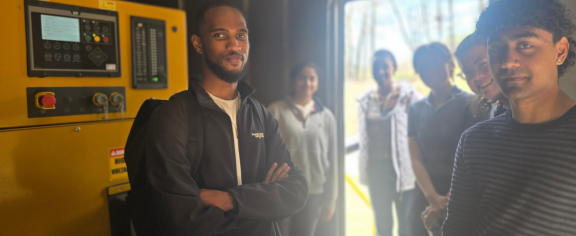
The database will help researchers explore questions about the causes and effects of power outages and how policy interventions can help strengthen grid resilience.

2024-05-20
Researchers in the School of Economics hope the tool they're developing can help policymakers and community organizations implement more timely and targeted interventions to alleviate hunger on the continent.
2024-04-30
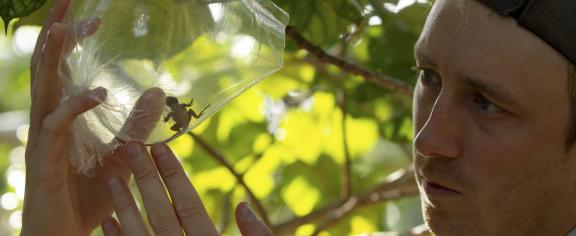
Stroud joins nine newly appointed Fellows and ten ESA Early Career Fellows, elected for "advancing the science of ecology and showing promise for continuing contributions" in the field.
2024-01-30
As the idea of solar geoengineering picks up steam, Harding invites everyone to join the conversation, starting with learning about what it is, how it works, and whether or not this once-niche proposition really can save the world.
2023-06-13
The interdisciplinary Environmental Science (ENVS) degree program, developed by faculty in the Schools of Earth and Atmospheric Sciences and Biological Sciences, is now enrolling students interested in a wide variety of environment-related careers.
2023-05-30
Researchers at the Georgia Institute of Technology and Yale University are proposing a novel pathway through which coastal ecosystem restoration can permanently capture carbon dioxide from the atmosphere.
2022-12-07
Energy, Policy, and Innovation Center leads effort to develop new energy planning models for metro Atlanta
2022-04-20
The rising sea levels along Georgia’s Savannah coast and an uptick in more severe storms during hurricane season are bellwethers to looming ecological challenges stemming from climate change.