
2026-10-02
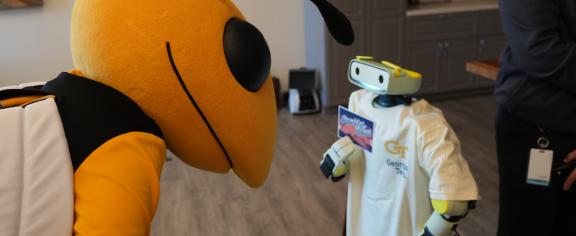
The collaboration will support research in robotics, industrial and systems engineering, and aerospace technology while fostering innovation in foundational and emerging technologies.
2026-09-24
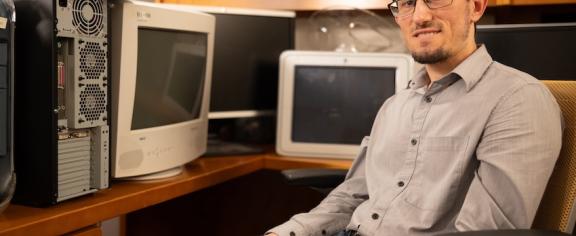
To improve robot performance and advance memory capabilities needed for reliable home use, Georgia Tech researchers have developed a new benchmark to evaluate the memory capabilities of vision-language models (VLMs).

2026-09-22
Emory and Georgia Tech launch a new MD/MS in Robotics pathway that combines medical training with advanced robotics education.
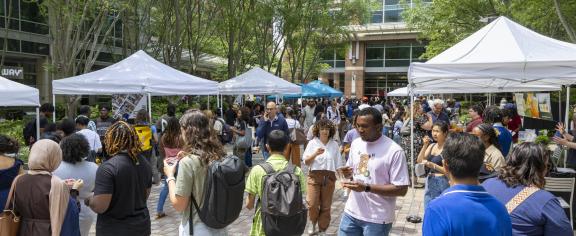
Georgia Tech Strengthens Atlanta's Innovation Ecosystem Through Tech Square Tech Hop and Avant South
2026-08-07
Tech Square Tech Hop and Avant South showcase Georgia Tech's leadership in strengthening Atlanta's growing innovation ecosystem.

2026-02-19
A research team that expands GTRI, the College of Engineering, and the College of Computing have developed a robot capable of pollinating flowers in indoor farms.
2025-11-19
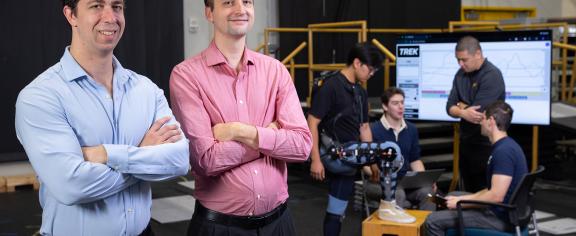
Georgia Tech researchers are using AI to quickly train exoskeleton devices, making it much more practical to develop, improve, and ultimately deploy wearable robots for people with impaired mobility.
2025-08-21
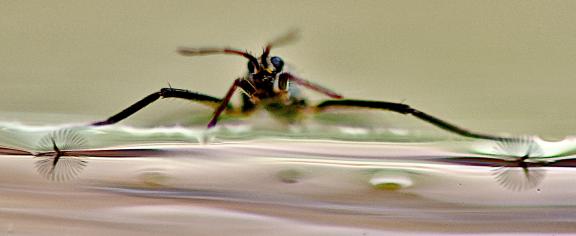
A new study explains how tiny water bugs use fan-like propellers to zip across streams at speeds up to 120 body lengths per second
2025-06-11
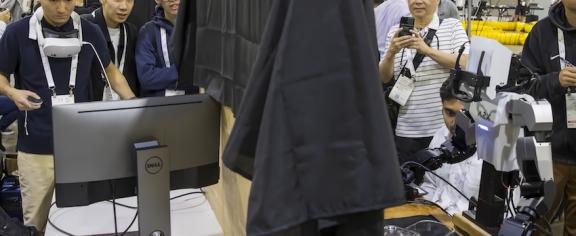
A Georgia Tech team earned second place in the ICRA Robot Teleoperation Contest for their EgoMimic algorithm, which allows robots to learn skills by mimicking human tasks from first-person video.

2025-05-16
By hitting the water in a “V” shape, then quickly extending their bodies underwater, the Māori have perfected the art of huge splashes.

2025-04-17
Zijie (Jay) Wang (Ph.D. ML-CSE 2024) is a recipient of the 2025 Outstanding Dissertation Award from the Association for Computing Machinery Special Interest Group on Computer-Human Interaction (ACM SIGCHI).