

2026-10-12
The Office of Information Technology will host its campuswide FORGE AI Summit Nov. 16 – 18.

2026-08-12
The new AI framework called SlideAgent helps large language models (LLMs) better understand complex visual documents used in the workplace like presentation slide decks, brochures, and reports.
2026-09-21
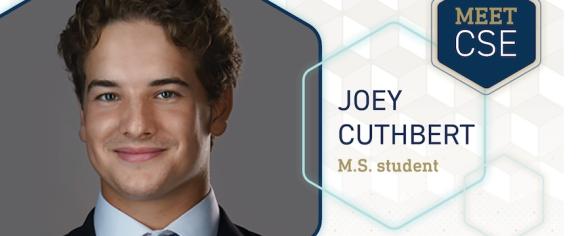
This summer, M.S. student Joey Cuthbert completed an internship at the Air Force Research Laboratory (AFRL), supporting work that addresses national priorities while laying the foundation for future innovations.

2026-09-01
To advance understanding of turbulence, the National Science Foundation is establishing a new, $30 million Science and Technology Center (STC) at Michigan State University. Georgia Tech is among eight universities supporting the center.

2026-07-06
Researchers have developed what they believe is the strongest benchmark dataset on measuring the geolocation accuracy of LLMs.

2026-04-30
School of Interactive Computing faculty and students have recently received notable awards and honors, including Microsoft research fellowship awards.
2026-03-31
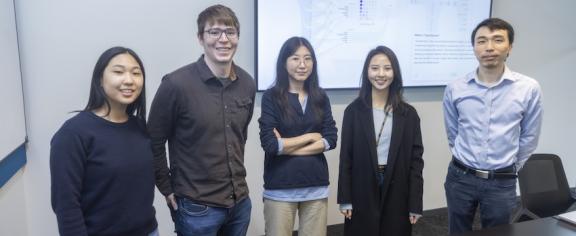
Georgia Tech researchers are making AI easier to understand through their work on Transformer Explainer. The free, online tool shows non-experts how ChatGPT, Claude, and other large language models (LLMs) process language, improving AI literacy.

2026-03-31
A Georgia Tech study finds older adults are more likely to trust voice-activated AI systems when those systems clearly explain how and why they make decisions.

2026-02-12
Georgia Tech's Qi Tang has received an Early Career Research Program award from the Department of Energy's Office of Science. The $875,000 grant supports Tang for five years to craft ML tools that analyze data from nuclear experiments and simulations.

2026-01-29
Georgia Tech researchers say HPC and artificial intelligence (AI) advances this year are poised to improve how people power their homes, design safer buildings, and travel through cities.