Maintaining campus buildings often means identifying problems before they become visible. Georgia Tech’s Planning, Design, and Construction department is piloting an innovative building envelope assessment at Lyman Hall that uses drone-mounted infrared technology to detect hidden moisture intrusion and potential building performance issues.
The study is being conducted with Copeland Building Envelope Consulting serving as the engineering consultant and Lamarr.ai, a Georgia Tech-affiliated startup, providing the technology, which was originally developed through research in the College of Design.
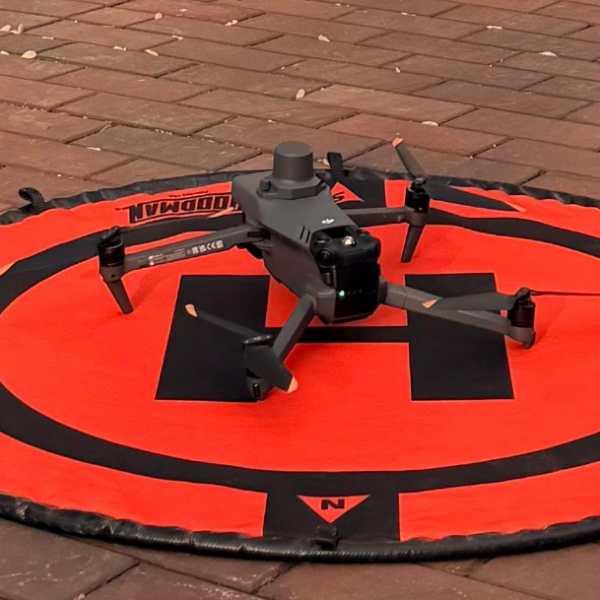
Using drones equipped with thermal imaging sensors, the team can safely and efficiently scan building exteriors to identify areas where moisture may be entering walls, roofs, and other building systems. The technology provides campus architects, project managers, and facilities teams with valuable data to help target repairs early, potentially reducing future maintenance costs and extending the life of campus buildings.
"This started because of a leak in Lyman, and there were patches to temporarily address the problem. When a similar problem occurred in the J.S Coon Building, there was a wider conversation about addressing leaks and flooding in these older buildings," said Planning, Design, and Construction architect Bill Oswell.
Among the project partners is Arjun Bir, a 2018 Georgia Tech civil engineering alumnus. Bir graduated with highest honors and has since earned numerous accolades, including the MIT Water Innovation Prize, Georgia Tech's Dean's Impact Award, and recognition as a member of Georgia Tech's 40 Under 40.
“This project was especially meaningful because it was my first project on Georgia Tech's campus,” Bir said. “Working on the buildings that helped shape my own career was incredibly rewarding.”
Since starting at Copeland's Atlanta office in 2025, Bir has supported partnerships with other institutions including Emory University, Kennesaw State University, Atlanta Public Schools, and Cobb County Schools.
The Lyman Hall assessment is also significant for Lamarr.ai, marking the startup's first project on Georgia Tech's campus. The company traces its roots to research and technology development conducted at Georgia Tech and demonstrates how Institute-driven innovation can create real-world solutions that benefit the campus community.
The project aligns with Georgia Tech's ongoing commitment to using data-driven technologies to improve campus operations and stewardship of its facilities. Drone-based infrared scanning offers a faster, safer, and more comprehensive way to evaluate building conditions than traditional inspection methods. Facilities leaders see this approach as an important tool for the future of campus building maintenance.
The Lyman Hall project highlights a Georgia Tech success story bridging alumni expertise, startup innovation, and campus operations to preserve the buildings that support teaching, learning, and research every day.