
2026-06-18
Researchers at Georgia Tech say they have developed a system to determine whether a cyberattack caused drone crashes.

2026-05-19
New cybersecurity research indicates that one of the world’s leading age verification providers collects and shares highly sensitive personal data with third parties and in some cases don't even enforce the policy..

2026-07-14
Richard DeMillo has been named to the inaugural class of the ACM SIGSOFT Software Engineering Academy.

2026-07-06
Researchers have developed what they believe is the strongest benchmark dataset on measuring the geolocation accuracy of LLMs.
2026-06-25
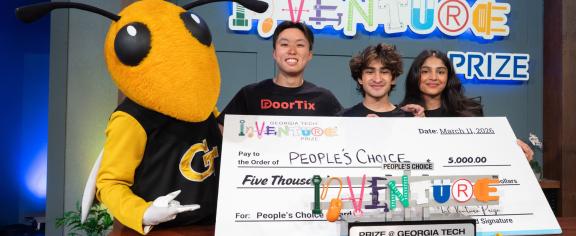
As fans around the world search for tickets to FIFA World Cup 2026 matches, a team of Georgia Tech students is working to make buying tickets to major events less stressful and more transparent.
2026-04-30
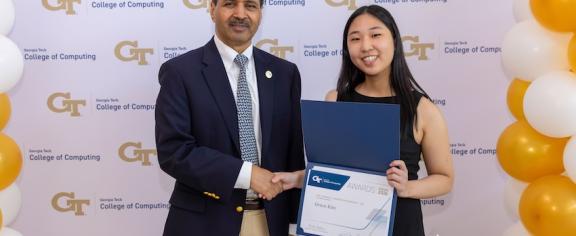
Students, faculty, and staff from the School of Computational Science and Engineering (CSE) were among those recognized at the College of Computing's 35th Annual Awards Celebration..

2026-04-30
School of Interactive Computing faculty and students have recently received notable awards and honors, including Microsoft research fellowship awards.
2026-03-31
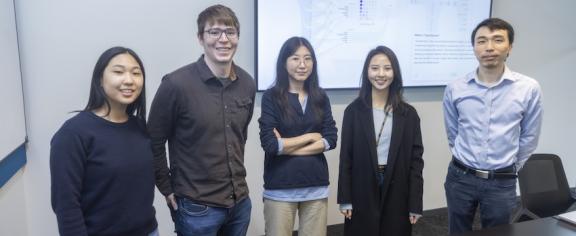
Georgia Tech researchers are making AI easier to understand through their work on Transformer Explainer. The free, online tool shows non-experts how ChatGPT, Claude, and other large language models (LLMs) process language, improving AI literacy.

2026-03-31
A Georgia Tech study finds older adults are more likely to trust voice-activated AI systems when those systems clearly explain how and why they make decisions.

2026-04-22
Georgia Tech is working with Zoo Atlanta to design an audio enrichment wall for African elephants.